

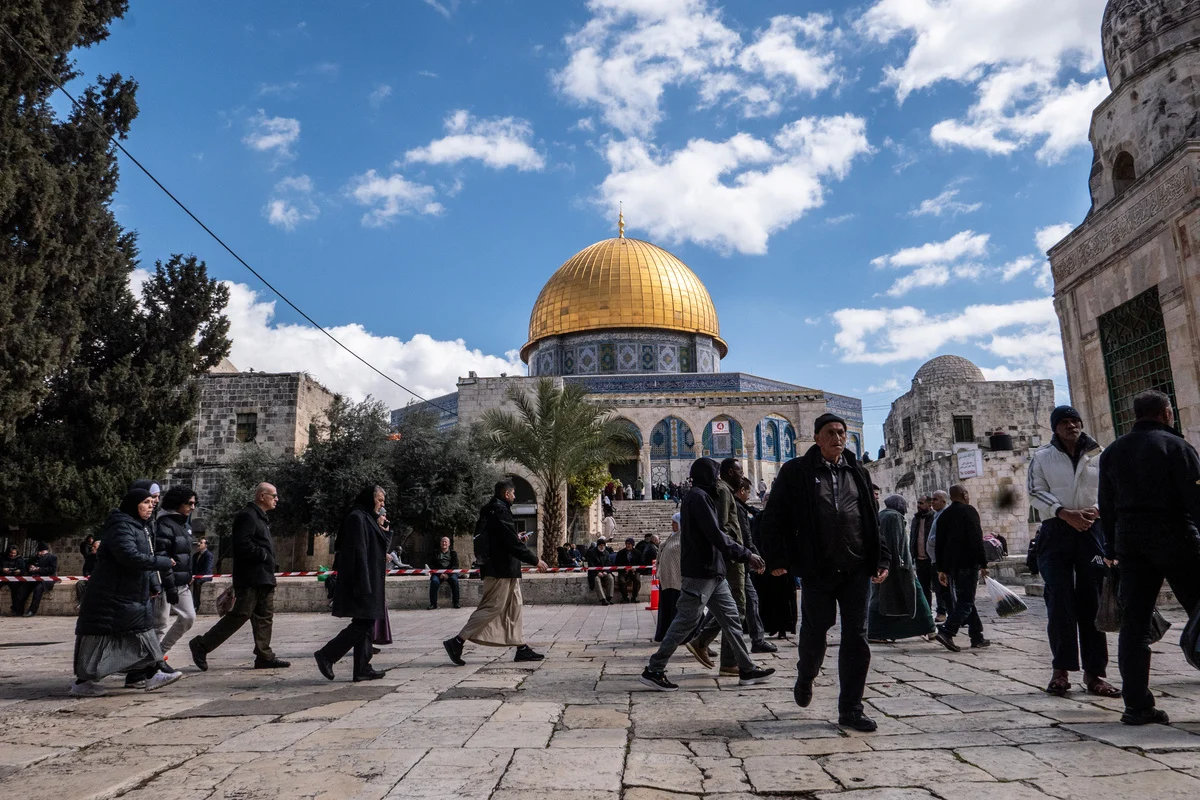
Tel Aviv, Sketsa.id – Israeli authorities have decided to keep the Al-Aqsa Mosque closed until Eid al-Fitr and beyond. The decision was communicated to the Islamic Waqf, the body responsible for managing the holy site, in recent days, according to information obtained by Middle East Eye.
Al-Aqsa Mosque, one of Islam’s holiest sites, was closed by Israeli authorities in early March citing “security concerns” amid the ongoing US-Israel war against Iran. The unprecedented closure comes during Ramadan, the holiest month in the Islamic calendar.
Palestinians have condemned the policy as Israel’s latest attempt to exploit security tensions to impose further restrictions and consolidate control over Al-Aqsa. This marks the first Ramadan since Israel seized East Jerusalem in 1967 during which Palestinians have been unable to perform Friday prayers at the mosque.
Last week, eight Muslim-majority countries condemned the “unjustified” closure, stating that Israel has “no sovereignty” over the holy site and must immediately lift restrictions. However, the closure continues unabated.
Friday prayers and nightly Tarawih prayers during Ramadan remain banned. Palestinians are barred from entering the site, with a heavy Israeli military presence in the Old City. Since the closure, no more than 25 Waqf staff members per shift have been permitted inside the vast mosque complex.
Request Denials and Alleged Camera Installation
A source told MEE that Israeli authorities even rejected requests for additional manuscript department staff to enter the site. Police reportedly told the Waqf that if more employees were allowed in, Israeli settlers would be permitted to resume their daily incursions into the mosque.
The source added that Waqf officials suspect Israeli forces have also installed cameras inside prayer halls at Al-Aqsa, including within the Dome of the Rock, enabling continuous surveillance of the holy site.
Old City Locked Down, Life Outside Walls Proceeds Normally
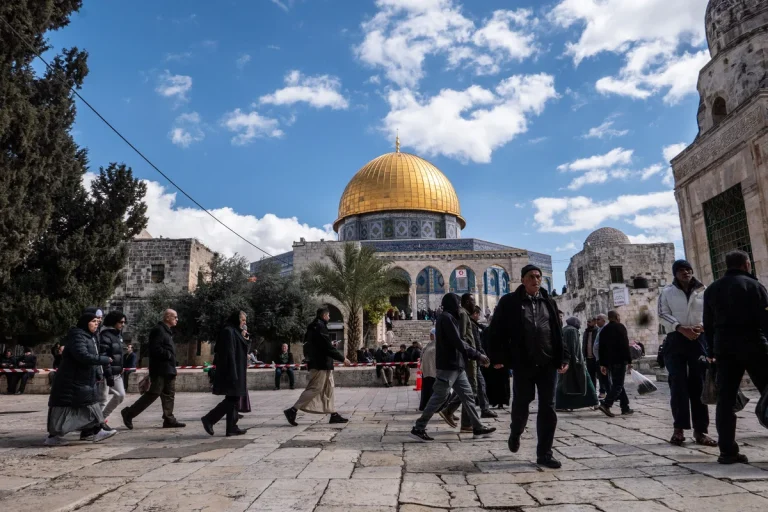
The mosque closure has been accompanied by a near-total lockdown of the Old City, where Al-Aqsa and dozens of bustling Palestinian-run markets are located. Only Old City residents have been allowed entry since the war with Iran began, leaving the area deserted. Meanwhile, life continues largely uninterrupted just meters outside the ancient city walls.
On Laylat al-Qadr, the holiest night in the Islamic calendar, which fell on Sunday (March 16), Israel deployed hundreds of police officers to block routes to the mosque, forcing worshippers to pray in the streets under the threat of violence.
“The closure of the Old City in this manner is unprecedented,” said Dr. Mustafa Abu Sway, a professor who teaches at Al-Aqsa Mosque and a member of the Islamic Waqf Council in Jerusalem.
He highlighted the inconsistency between conditions inside and outside the Old City. “There is an inconsistency when you compare what is happening inside the Old City with what is happening outside it, where people move freely, pray in mosques, and life in the city continues as usual.”
Abu Sway added that if safety concerns were genuine, worshippers could take shelter in Al-Aqsa’s prayer halls, which can accommodate thousands.
Concerns Over Permanent Changes
Aouni Bazbaz, director of international affairs at the Islamic Waqf, told MEE that the closure has raised concerns about long-term changes. “This has sparked fears that what is presented as temporary measures could gradually become permanent or semi-permanent arrangements, especially if people become accustomed to the restrictions or if access patterns to the site are altered,” he said.
Al-Aqsa Mosque has been governed by decades-old status quo arrangements, which preserve its religious status as an exclusively Islamic site. Under these arrangements, site administration, including access control, falls under Jerusalem’s Islamic Waqf, a religious endowment body appointed by Jordan responsible for managing the mosque complex.
However, since Israel’s occupation of East Jerusalem in 1967, Palestinians say these arrangements have gradually eroded through increased access restrictions for Muslims while Jewish presence and Israeli control have expanded.
Israel’s control over East Jerusalem, including the Old City, violates several principles of international law, which establish that an occupying power has no sovereignty over occupied territory and cannot make permanent changes there. (cc )