

Spanyol, Sketsa.id – A sweeping power outage struck Spain and Portugal on Monday, 28 April 2025, plunging millions into darkness and disrupting daily life across the Iberian Peninsula. The unprecedented blackout, described as one of Europe’s worst in recent history, halted transportation, shut down businesses, and prompted both nations to declare states of emergency. As authorities scramble to restore power and investigate the cause, questions linger about the vulnerability of Europe’s energy grid.
The outage began around 12:30 p.m. local time in Spain (11:30 a.m. in Portugal), affecting major cities like Madrid, Barcelona, Lisbon, and Valencia. Traffic lights failed, causing gridlock on roads. Trains and metro systems ground to a halt, stranding thousands. Airports, including Madrid’s Barajas and Lisbon’s Humberto Delgado, faced closures or operated on backup generators, leading to flight cancellations and delays.
Hospitals switched to emergency power, suspending non-critical operations, while ATMs, mobile networks, and internet services collapsed, leaving businesses and residents in disarray.
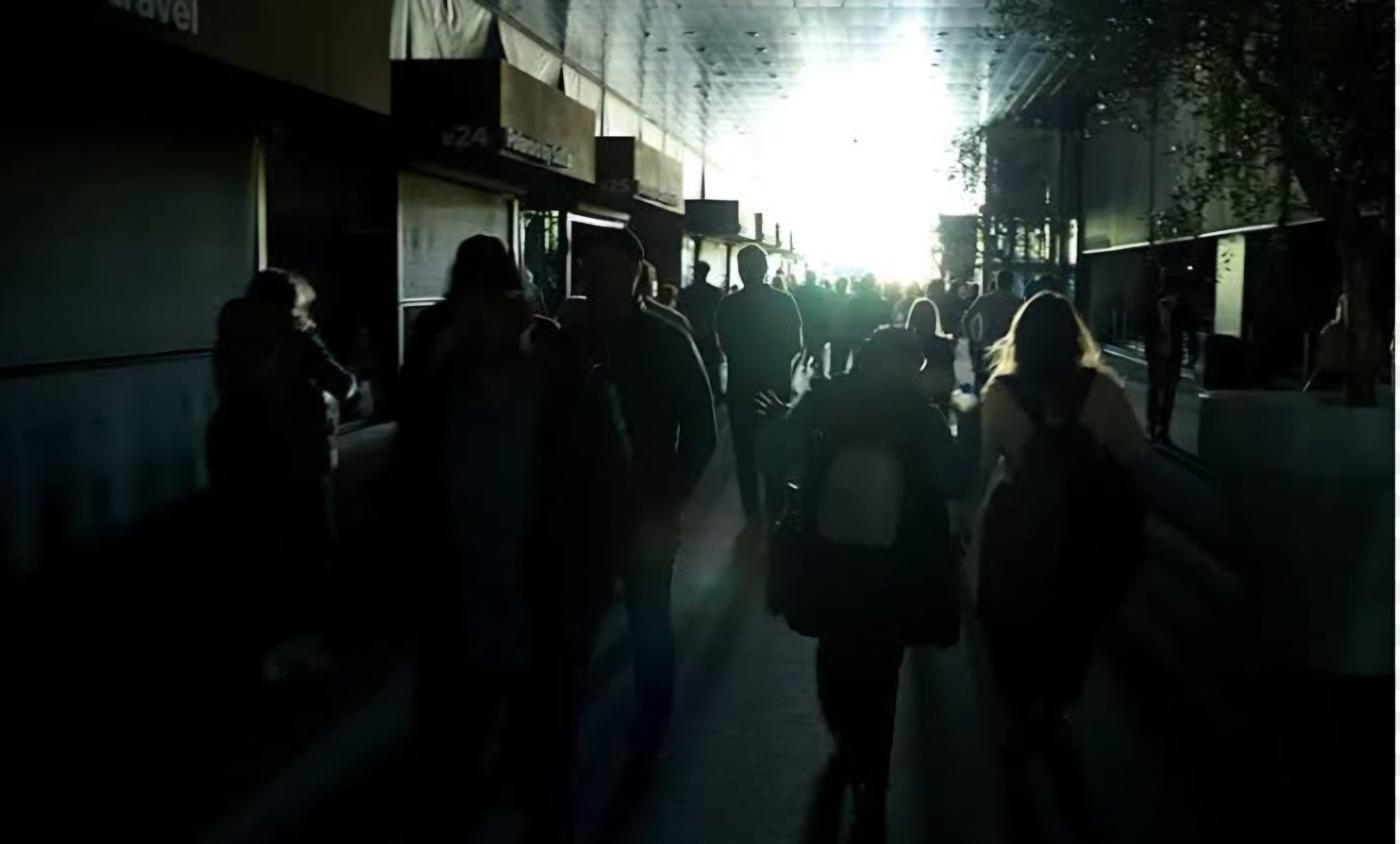
In Madrid, commuters were evacuated from darkened metro tunnels, and in Lisbon, police were deployed to manage traffic chaos. Social media footage captured eerie scenes of people navigating pitch-black stations or queuing for cash-only purchases at stores.
“It was like the city stopped,” said Kate Su, an American tourist in Porto, describing shuttered shops and empty streets.
By early Tuesday, 29 April, Spain’s grid operator, Red Eléctrica (REE), reported that 99.95% of the country’s power had been restored, with nearly all substations operational. In Portugal, Redes Energéticas Nacionais (REN) reconnected 85 of 89 substations, serving 6.2 million households. However, full normalization could take up to a week in Portugal due to the complexity of the grid’s recovery.
Spain’s Prime Minister Pedro Sánchez praised citizens for their “responsibility and civic spirit” during the crisis, noting that the government worked through the night to restore services.
Portugal’s Prime Minister Luís Montenegro echoed the call for calm, with both leaders emphasizing the deployment of security forces—30,000 police in Spain and additional officers in Portugal—to maintain order and prevent looting.
What Caused the Blackout?
The exact cause remains under investigation, with conflicting theories emerging. REE attributed the outage to a “strong oscillation” in the grid, triggered by a disconnection between Spain and France’s power networks.
This led to a cascading failure across the Iberian Peninsula, briefly affecting parts of southern France and Andorra. Portugal’s REN suggested a “rare atmospheric phenomenon” involving extreme temperature variations in Spain, causing “anomalous oscillations” in high-voltage lines.
However, REN later clarified that no such phenomenon was confirmed. Speculation about a cyberattack surfaced, but both Sánchez and European Council President António Costa dismissed this, stating there was “no indication” of foul play.
Spain’s National Security Council convened to assess the situation, and the European Network and Information Security Agency (ENISA) confirmed no evidence of a cyber-related cause. A technical issue in the France-Spain energy connection is currently the leading hypothesis, according to a European trade body.
A Wake-Up Call for Europe’s Grid
The blackout exposed the fragility of the Iberian Peninsula’s energy grid, which operates as an “energy island” with limited interconnections to the rest of Europe.
Experts note that while these interconnections allow for clean energy sharing, they also create pathways for rapid failure. Previous outages, such as Italy’s 2003 blackout caused by a tree disabling a Swiss power line, highlight the risks of interconnected grids.
Georg Zachmann, a senior fellow at Bruegel, explained that the outage resulted from “cascading disconnections” when the grid’s frequency dropped below the European standard of 50Hz.
Spain’s heavy reliance on solar and wind energy may have increased its vulnerability to such disruptions, though interconnections with France and Morocco helped restore power in some regions.
As Spain and Portugal recover, the incident raises urgent questions about grid resilience and energy infrastructure. The European Commission has long called for greater integration of national energy systems, but progress has been slow. With power largely restored, both governments face the task of ensuring such a crisis does not recur, while addressing public concerns about transparency and preparedness.
For now, the people of Spain and Portugal are breathing a sigh of relief as lights flicker back on, but the memory of a day plunged into darkness will linger. (*)