

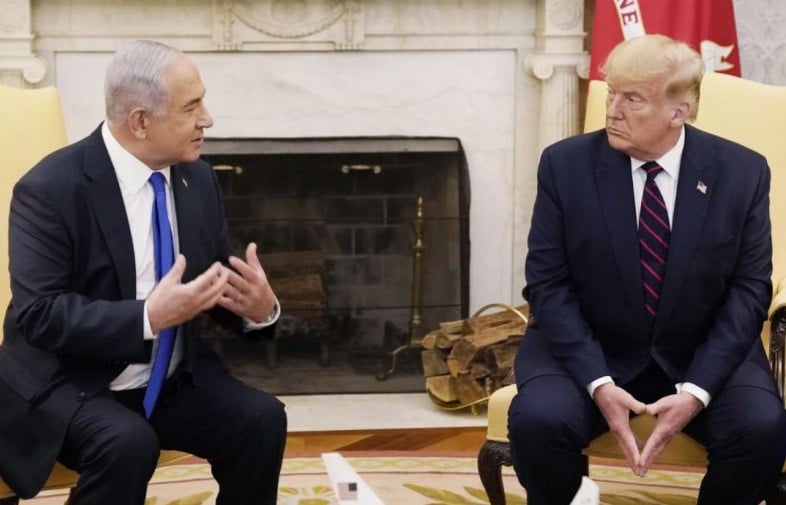
Washington, Sketsa.id – U.S. President Donald Trump has pledged to apply firm pressure on Israeli Prime Minister Benjamin Netanyahu to bring an end to the ongoing war in Gaza. Netanyahu is scheduled to visit Washington next week, where both leaders are expected to discuss a potential ceasefire agreement.
“I’ll be very firm,” Trump told reporters at the White House on Wednesday (July 2, 2025), as quoted by Sputnik. “He [Netanyahu] wants to end it too. I believe we’ll reach a deal next week.”
Backchannel Talks and a Ceasefire Framework
According to Israel Hayom, Trump and Netanyahu have been holding behind-the-scenes talks since June 23—just one day after the U.S. launched an attack on Iran’s nuclear facility. Both leaders reportedly agreed that Israel would end its military operations in Gaza within two weeks.
The ceasefire plan is part of a broader post-war framework that includes a political and diplomatic transition, aimed at paving the way for normalized relations between Israel and several Arab nations.
Hostage Release and Hamas’ Future
As part of the proposed deal, Hamas would release 50 remaining hostages, 20 of whom are believed to still be alive. The release of hostages is considered a key condition for initiating the post-conflict process.
Another major component of the plan involves removing Hamas from governance and military control in Gaza. However, this condition faces significant challenges, as Hamas maintains strong local support and has firmly rejected any suggestion of exile or political exclusion.
Arab States’ Role in Gaza
Four Arab countries—including the United Arab Emirates and Egypt—are expected to lead an interim administration in Gaza. The two other nations involved have not yet been disclosed. These countries would be responsible for managing security, reconstruction, and regional stabilization during the transitional phase.
Two-State Solution and West Bank Sovereignty
During their discussions, Trump also urged Netanyahu to publicly support a two-state solution as part of a long-term peace process. However, this support would be conditional on internal reforms by the Palestinian Authority. Without those reforms, Israel would not be obligated to advance further diplomatic steps.
In exchange for backing the two-state initiative, the U.S. is reportedly prepared to recognize Israeli sovereignty over certain areas in the West Bank—an offer likely to spark international condemnation as a violation of international law.
Normalizing Ties and Gaza Reconstruction
Trump hopes the conclusion of the war and progress toward a two-state solution will prompt countries like Saudi Arabia and Syria to follow suit in normalizing relations with Israel—expanding the scope of the Abraham Accords.
However, several Arab nations have voiced strong opposition, insisting they will not participate in Gaza’s reconstruction unless the Palestinian Authority plays a central role.
The post-war plan also includes a voluntary resettlement program, allowing Gaza residents who wish to leave to relocate to third-party countries. However, the destination countries, the number of people eligible, and the relocation mechanism have yet to be clarified. (*)