

Sketsa.id – In an era of escalating global tensions, the concepts of terrorism and color revolutions often collide, igniting polarized debates. Color revolutions—nonviolent mass movements seeking to topple authoritarian regimes through symbolic colors and peaceful protests—have reshaped post-Soviet politics. Yet, powers like Russia and China frequently brand these uprisings as “soft terrorism” or foreign-backed schemes to destabilize nations. This framing not only fuels geopolitical rivalries but also stretches the definition of terrorism to encompass nonviolent dissent, raising critical questions about intent, perception, and impact.
This article dissects the intricate relationship between terrorism and color revolutions, weaving together perspectives from the West, Russia, and China. Through historical cases and current trends, we aim to illuminate how these competing narratives shape global security, grounded in evidence to avoid partisan traps.
What Are Terrorism and Color Revolutions?
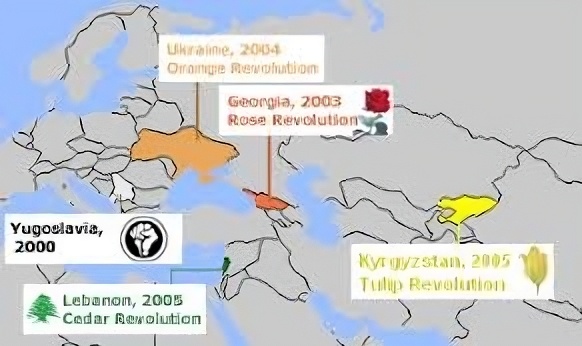
Terrorism is defined as the deliberate use of violence against civilians to achieve political or ideological ends. By contrast, color revolutions describe post-Cold War movements that drove regime change through mass protests and electoral disputes, such as Georgia’s Rose Revolution (2003), Ukraine’s Orange Revolution (2004), and Kyrgyzstan’s Tulip Revolution (2005). Celebrated in the West as democratic triumphs, these movements are viewed by Russia and China as Western-orchestrated threats to national stability.
Both nations have expanded the scope of terrorism to include nontraditional threats like color revolutions, framing them as hybrid warfare. This approach enables governments to justify crackdowns on dissent, both domestic and foreign.
Where Narratives Collide
The link between terrorism and color revolutions often emerges in counter-revolutionary rhetoric. Russia, for example, warns that such movements could spark domestic terrorism in volatile regions like Tatarstan or Bashkortostan. In January 2022, President Vladimir Putin labeled the unrest in Kazakhstan as “international terrorism” driven by foreign actors, explicitly rejecting the idea of a color revolution in the post-Soviet space. Similarly, Chinese President Xi Jinping has urged Central Asian states to block color revolutions, offering counterterrorism training to fortify regional alliances against this perceived threat.
Western analysts, however, often view these accusations as propaganda to suppress democratic aspirations. Global terrorism trends in 2025 are increasingly driven by lone-actor attacks and far-right extremism, not color revolutions. Yet, failed revolutions can escalate into violence, as seen in Ukraine’s 2014 Euromaidan protests, which Russia claimed fueled conflict and terrorism.
Case Studies: Kazakhstan and Ukraine
The 2022 Kazakhstan unrest is a prime example. Putin described it as a terrorist plot involving foreign-trained militants, prompting military intervention by the Russia-led Collective Security Treaty Organization (CSTO) to prevent a color revolution.
Ukraine offers another lens. Both the Orange Revolution and Euromaidan were linked by Russia to terrorism, with allegations that Ukrainian nationalists supported terrorist groups in the North Caucasus. Fears of color revolutions led Russia to create its National Guard in 2016 to counter both terrorism and revolutionary threats.
In Asia, China employs a parallel narrative. In Xinjiang, the East Turkestan Islamic Movement (ETIM), designated a terrorist group by the UN in 2002, is often tied to the specter of color revolutions. Chinese state media accuse the West of backing these movements as a direct threat to national security.
Implications for 2025
By 2025, terrorism is shifting toward cyber threats and lone-wolf extremism. Yet, conflating terrorism with color revolutions risks inflaming tensions, particularly in Sino-Russian partnerships in Central Asia, where both nations amplify the threat of Western-backed protests while sidelining genuine terrorist risks.
Such narratives can skew counterterrorism priorities. For example, the early-2025 New Orleans attack highlights how terrorism evolves independently of color revolutions, despite geopolitical rhetoric blurring the lines.
For Indonesia and Southeast Asia, the stakes are high. Equating legitimate dissent with terrorism risks stifling civic space. Distinguishing between terrorist threats and peaceful protests is vital for balancing security and democracy.
The interplay between terrorism and color revolutions remains a battleground of ideas. For some, these movements are beacons of democratic hope; for others, they are tools of foreign subversion. While evidence suggests color revolutions rarely cause terrorism directly, their weaponization in geopolitical narratives shapes policies from military interventions to counterterrorism strategies.
In 2025, as the nature of terrorism evolves, societies must critically assess these narratives to foster informed dialogue and prevent escalation. Sketsa.id readers are invited to share their perspectives below and engage in this vital global conversation. (*)