

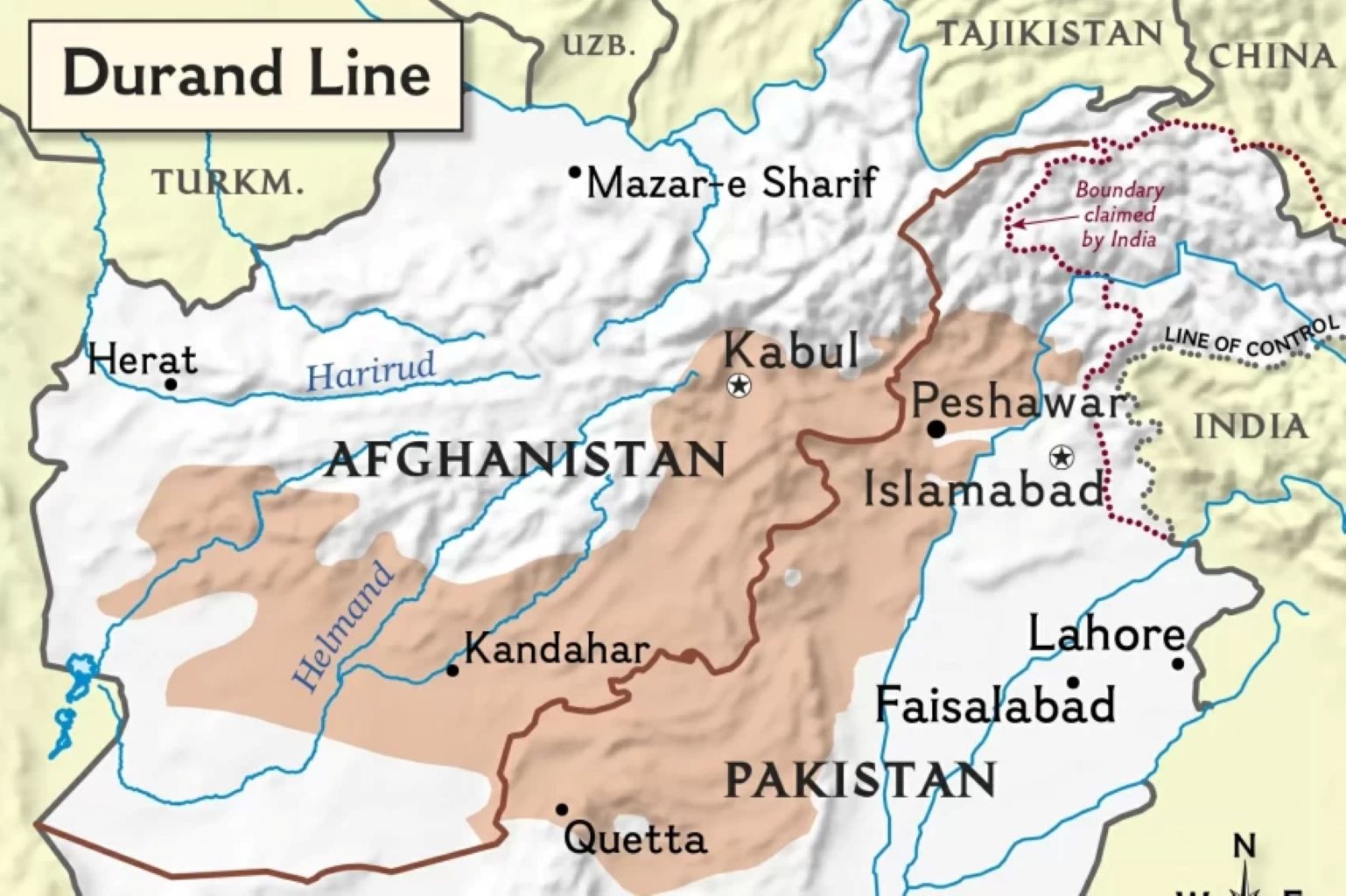
Sketsa.id – The Durand Line, a 2,640-kilometer border established by British colonial authority in 1893, remains a primary source of enduring conflict and diplomatic strain between Afghanistan and Pakistan. While recognized by Pakistan as an official international boundary, the line is consistently rejected by successive Afghan governments, fueling cross-border hostilities and strategic rivalry.
Historical Origins and the Core of the Dispute
The border was demarcated in an agreement between Sir Mortimer Durand of British India and Amir Abdur Rahman Khan of Afghanistan. The primary objective was to solidify the limits of British imperial influence and separate it from the Afghan empire. A central point of contention is that the line artificially divided the traditional lands of the Pashtun ethnic groups.
Following its independence in 1947, Pakistan inherited and affirmed the Durand Line as a legitimate international border. Conversely, governments in Kabul, from the monarchy to the republic and now the Taliban, have historically refused to recognize its legitimacy, labeling it an imposed and unjust relic of colonialism.
Contemporary Rejection and Rhetorical Stance
The dispute has intensified in recent months. In February 2024, Sher Mohammad Abbas Stanikzai, Afghanistan’s Deputy Foreign Minister, unequivocally stated, “We will never recognize it [the Durand Line].” He further emphasized that the division “separated half of Afghanistan,” which lies on the other side of the border.
The current Taliban administration has officially referred to the Durand Line as a “hypothetical line,” underscoring its non-recognition and challenging the very basis of the border’s existence. This fundamental disagreement continues to be a major irritant in bilateral relations.
Recent Military Clashes and Conflicting Claims
The rhetorical friction has repeatedly escalated into open military confrontation. One of the most severe border clashes in recent years occurred this past weekend, resulting in significant casualties from both sides, though official figures are contradictory.
Zabihullah Mujahid, the Taliban spokesperson, claimed that Afghan forces killed 58 Pakistani soldiers and captured several military posts in what he described as a “retaliatory” action.
The Pakistani military, through its Inter-Services Public Relations (ISPR) wing, provided a different account, acknowledging that 23 of its soldiers were “martyred.” Pakistani authorities stated they had “neutralized” 200 Taliban fighters and affiliated terrorists in a robust defense. The Pakistani interior minister condemned the initial Afghan attack as “unprovoked firing.”
A Shift in Allegiances
The current hostility marks a significant deterioration in a once-close relationship. Pakistan was a principal supporter of the Taliban during its insurgency against the U.S.-backed government in Kabul and was one of only three nations to recognize the first Taliban regime from 1996 to 2001.
However, relations have soured since the Taliban’s return to power in 2021. Islamabad accuses the de facto authorities in Kabul of providing safe haven to militants from Tehrik-e-Taliban Pakistan (TTP), an allegation the Taliban government denies. This accusation forms the core of Pakistan’s current grievances, linking border security directly to the Taliban’s domestic policy.
Military Escalation and War of Words
The recent skirmishes reportedly spanned multiple border locations, including areas in Pakistan’s Khyber Pakhtunkhwa province such as Angoor Adda, Bajaur, and Dir, as well as Balochistan. Afghan news channel TOLO reported the deployment of Taliban tanks and heavy weaponry to the border areas in Kunar province.
The Pakistani military’s media wing condemned the “cowardly actions,” asserting that they “confirm Pakistan’s long-standing position that terrorists are being actively facilitated by the Taliban government.”
In conclusion, the Durand Line persists as more than a geographical boundary; it is a active fault line of historical grievance and modern geopolitical conflict. The colonial-era imposition continues to thwart stable relations and poses a significant challenge to regional security, with recent clashes demonstrating that a peaceful resolution remains elusive. (*)