

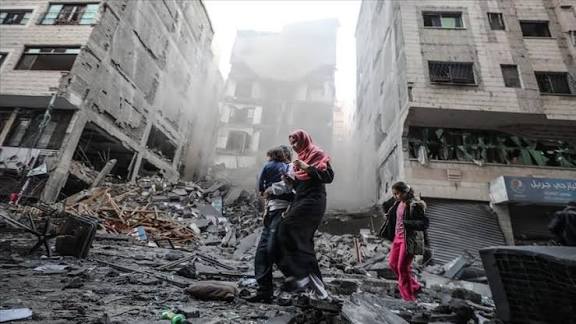
GAZA, Sketsa.id – A groundbreaking survey conducted by the Palestinian Center for Public Opinion (PCPO) has revealed a striking consensus among Gaza residents: the recent devastating conflict produced no winners. According to the comprehensive study carried out between October 8-12, 2025, an overwhelming 71.1% of Palestinians in Gaza believe both sides suffered equally in a war that brought nothing but destruction and human suffering.
The survey, titled “Gaza War… A Battle Without Winners,” involved 301 adults across the Gaza Strip and presented a sobering picture of war-weary citizens. When asked to explain their perspective, most respondents described the conflict as an exercise in futility that resulted in widespread devastation without delivering tangible political gains for either side. Only 11.3% viewed Israel as the winner, while merely 11% considered Hamas victorious, revealing how few found any cause for celebration in the conflict’s outcome.
The emotional toll of the war appears deeply etched in Gaza’s collective psyche. When questioned about their feelings following the war’s end, 53.8% of residents reported mixed emotions of relief tempered by anxiety and caution. Another 27% confessed to feeling primarily sad, fearful, or psychologically exhausted, underscoring the deep scars left by the prolonged violence. These responses paint a portrait of a population caught between tentative hope and profound weariness, where even the cessation of hostilities hasn’t brought genuine peace of mind.
The survey also explored attitudes toward international actors, particularly US President Donald Trump’s role in mediating the ceasefire. The results revealed deep skepticism, with 54.2% of Gazans expressing little or no confidence in Trump, while only 35.2% indicated some degree of trust in his involvement. This distrust appears rooted in broader doubts about America’s impartiality, despite acknowledgments that Washington played a crucial role in halting the fighting.
Looking toward the future, Gaza’s residents maintain cautious but divided expectations. While 40.9% anticipate gradual improvements in their situation, nearly as many (38.9%) predict that difficulties will persist for the foreseeable future. This near-even split reflects the fragile optimism of a population that has endured multiple conflicts and reconstruction cycles, yet still clings to hope for better days ahead.
Nabil Kukali, who conducted the research, observed that the findings signal a significant shift in public consciousness. “The war is no longer seen as a heroic endeavor,” he noted, “but rather as a humanitarian and economic burden that threatens future generations.” This sentiment appears to be driving a new political realism among Palestinians, who seem to be moving away from ideological rhetoric toward a more pragmatic assessment of their situation and prospects.
The survey methodology involved random telephone sampling through a CATI system, achieving a 75% response rate with a margin of error of ±5.6% at a 95% confidence level, providing a statistically reliable snapshot of Gazan public opinion in the immediate aftermath of the recent conflict. (*)