

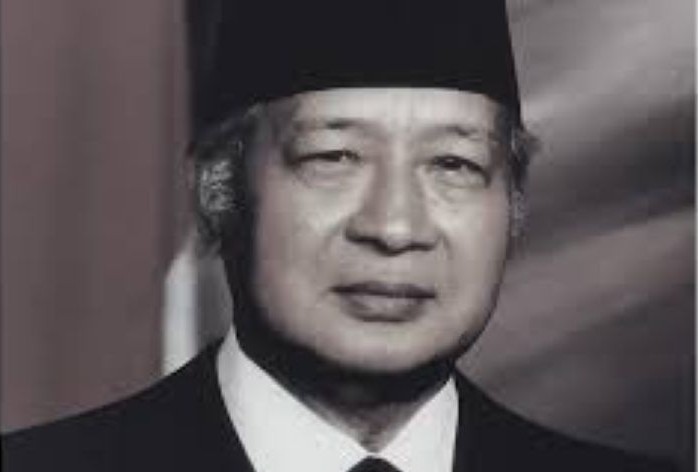
Jakarta, Sketsa.id – The conferment of the National Hero title upon Indonesia’s second president, Soeharto, by President Prabowo Subianto on Heroes’ Day, November 10, 2025, has sparked widespread public debate. The award was accepted by Soeharto’s eldest daughter, Siti Hardijanti Rukmana (Tutut), on behalf of the family, recognizing his contributions to armed and political struggle since the independence era, including leading the disarmament of Japanese troops in Yogyakarta in 1945. However, the decision was immediately met with both support and opposition, reflecting the ongoing polarization over the legacy of his 32-year New Order regime (1966-1998).
The proposal for this title had been submitted three times since 2010 but was only approved after a lengthy process from the regional to the national level, including an assessment by the Central Research and Assessment Team for Titles (TP2GP) at the Ministry of Social Affairs. Social Minister Saifullah Yusuf (Gus Ipul) stated that all proposed names, including Soeharto, had met the formal requirements. Despite this, debate has arisen, involving everyone from families of human rights abuse victims to supporters who emphasize his economic achievements.
Supporting Arguments: Recognition for Development and Stability
Supporters of the award highlight Soeharto’s contributions to building the foundations of modern Indonesia. Fadli Zon, Deputy Speaker of the House of Representatives (DPR), emphasized that Soeharto’s services as a president and soldier had met the qualifications for the hero title, including his role in national stability and economic development.
Under his leadership, Indonesia achieved rice self-sufficiency in the 1980s through agricultural intensification programs, involving field extension workers (PPL) and massive government support, creating what some farmers recall as “Soeharto’s Golden Age.” Furthermore, Soeharto is credited with maintaining political stability, including crushing the G30S/PKI rebellion in 1965, which is viewed by some as saving the nation from the communist threat.
Soeharto’s family, through Tutut, considers the pros and cons a normal part of democracy. “It’s fine to be contra, but don’t be extreme; what’s important is that we maintain unity and integrity,” she said. Data from social media monitoring firms like Drone Emprit noted an increase in positive content about Soeharto prior to the designation, including nostalgia for a harmonious family life and economic successes. Media outlets such as Bisnis Plus referred to it as “the two sides of Soeharto: hero or tyrant,” but stressed his development achievements. For his supporters, this title represents a form of historical reconciliation, choosing to make peace with the past without forgetting its wounds.
Opposing Arguments: Human Rights Abuses and Corruption as a Stain
Strong opposition has come from human rights activists, historians, and victims of the New Order. The National Commission on Human Rights (Komnas HAM) stated that the award “violates the historical facts of gross human rights violations” during Soeharto’s rule, including the events of 1965-1966 (mass killings of alleged communists, with estimates of 500,000 to 1 million victims), Tanjung Priok (1984), Petrus (mysterious shootings in the 1980s), and the May 1998 riots. Komnas HAM Chairperson Anis Hidayah asserted that this decision hurts victims who are still demanding justice and amounts to granting impunity.
The Gusdurian Network, through its Director Alissa Wahid, criticized the move, stating that Soeharto is a symbol of the corruption, collusion, and nepotism (KKN) that was formally cited in the MPR Decree Number XI/1998. Historian Andi Achdian from National University assessed that this move dampens the spirit of the 1998 Reformation. The Coordinator of KontraS, Dimas Bagus Arya, called the decision “disappointing but not surprising,” noting that previous proposals were rejected in 2010 and 2016. Senior Nahdlatul Ulama figure KH Ahmad Mustofa Bisri (Gus Mus) firmly rejected it: “I strongly disagree with making Soeharto a National Hero.”
International media like the BBC highlighted that Prabowo may have expedited the designation to “cleanse his political sins.” Legal expert Bivitri Susanti from STIH Jentera pointed to the decision’s impact on history, law, and democracy, particularly for women who were victims of the militaristic era’s violence. On social media platform X, some users rejected the title, citing Soeharto’s stance on issues like the genocide in Palestine or the case of murdered labor activist Marsinah, while others supported it as a step toward reconciliation.
Conclusion: A Mirror of Democracy and the Challenge of Reconciliation
This award reflects the dynamics of Indonesian democracy, where public debate serves as a space for a critical assessment of history. Minister of State Secretary Prasetyo Hadi stated that such debate is normal in a democracy. Historian Saskia Wieringa noted that Soeharto’s militaristic regime resembles current trends, suggesting that the title could be challenged if it violates justice. Ultimately, this decision invites national introspection: to acknowledge service without turning a blind eye to suffering, in pursuit of a mature unity. (*)