

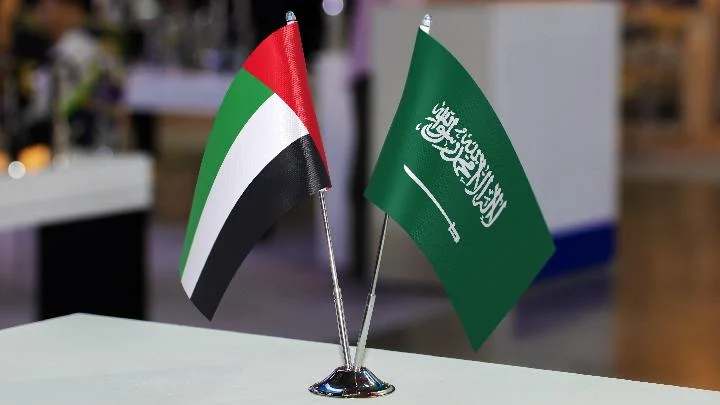
Abu Dhabi, Sketsa.id – A senior advisor to United Arab Emirates President Sheikh Mohammed bin Zayed Al Nahyan (MbZ) has launched a rare and direct public attack on Wahhabism, the conservative religious doctrine that forms the historical bedrock of neighboring Saudi Arabia.
Abdulkhaleq Abdulla, a prominent Emirati academic and close confidant of the UAE leadership, took to social media platform X on Wednesday to accuse the doctrine of resurging and targeting his nation’s core values. “Wahhabism is back, rising from its source, now openly targeting the UAE’s model of moderation and tolerance,” Abdulla wrote. He further alleged a coordinated campaign, stating, “A coordinated rhetoric on social media and regime-affiliated media legitimizes extremism and creates space for ISIS, Al-Qaeda, the Muslim Brotherhood, and anti-Western, anti-Semitic narratives.”
The statement is considered one of the most pointed public criticisms of Riyadh by a figure widely seen as reflecting Emirati leadership sentiment. Analysts suggest the rhetoric indicates that tensions between the two Gulf Cooperation Council (GCC) members have moved beyond policy disagreements into deeper ideological and identity-based conflict. The critique highlights a fundamental doctrinal divergence.
While Saudi Arabia’s religious establishment has historically been rooted in the Hanbali school of Sunni Islam and the Wahhabi interpretation, the UAE predominantly follows the Maliki school. Abu Dhabi has also cultivated a centrally managed, comparatively pluralistic model of Islam under its General Authority of Islamic Affairs and Endowments.
Wahhabism has provided the religious legitimacy for the Saudi state since the 18th-century alliance between the cleric Muhammad ibn Abd al-Wahhab and the House of Saud. Although Saudi Crown Prince Mohammed bin Salman has, in recent years, curtailed the political power of the religious establishment and promoted a more nationalist identity, the doctrine remains symbolically tethered to the kingdom’s foundation. Abdulla’s comments come amid escalating media confrontations. On Monday, the London-based, Saudi-linked outlet Independent Arabia published a cartoon depicting an Emirati figure dodging arrows labeled with contentious regional issues, including Yemen,Somalia, and Algeria.
The dispute appears rooted in diverging regional strategies, most acutely in Yemen. Abu Dhabi has backed the Southern Transitional Council (STC) and maintains influence in southern provinces, while Riyadh pursues its own security and political arrangements. Emirati media, including Sky News Arabia, recently highlighted mass demonstrations in southern Yemen supporting the STC, coinciding with reports of Saudi forces reinforcing positions in Shabwa following clashes.
The rivalry extends beyond Yemen, reflecting a broader contest for regional leadership, economic influence, and positioning in relations with Israel. While Riyadh and Abu Dhabi have not formally severed ties, sources cited by AFP report that no high-level diplomatic contact has occurred since late December. The ideological escalation marks a volatile new chapter in the relationship between two nations that have long been strategic allies, exposing fissures that could reshape the geopolitical landscape of the Gulf region. (*)