

Teheran, Sketsa.id – The relationship between Iran and the United States has entered its seventh decade. More than half a century has passed, and the two countries have never officially gone to war. Yet the world has repeatedly held its breath as tensions between them reached boiling point.
History records this rivalry as one of the most complex and dangerous conflicts in modern geopolitics. From secret coups, hostage crises, proxy wars, economic sanctions, to military operations that shook global stability, here is the long trail of animosity that continues to this day.
1953: Operation Ajax and a Wound That Never Healed
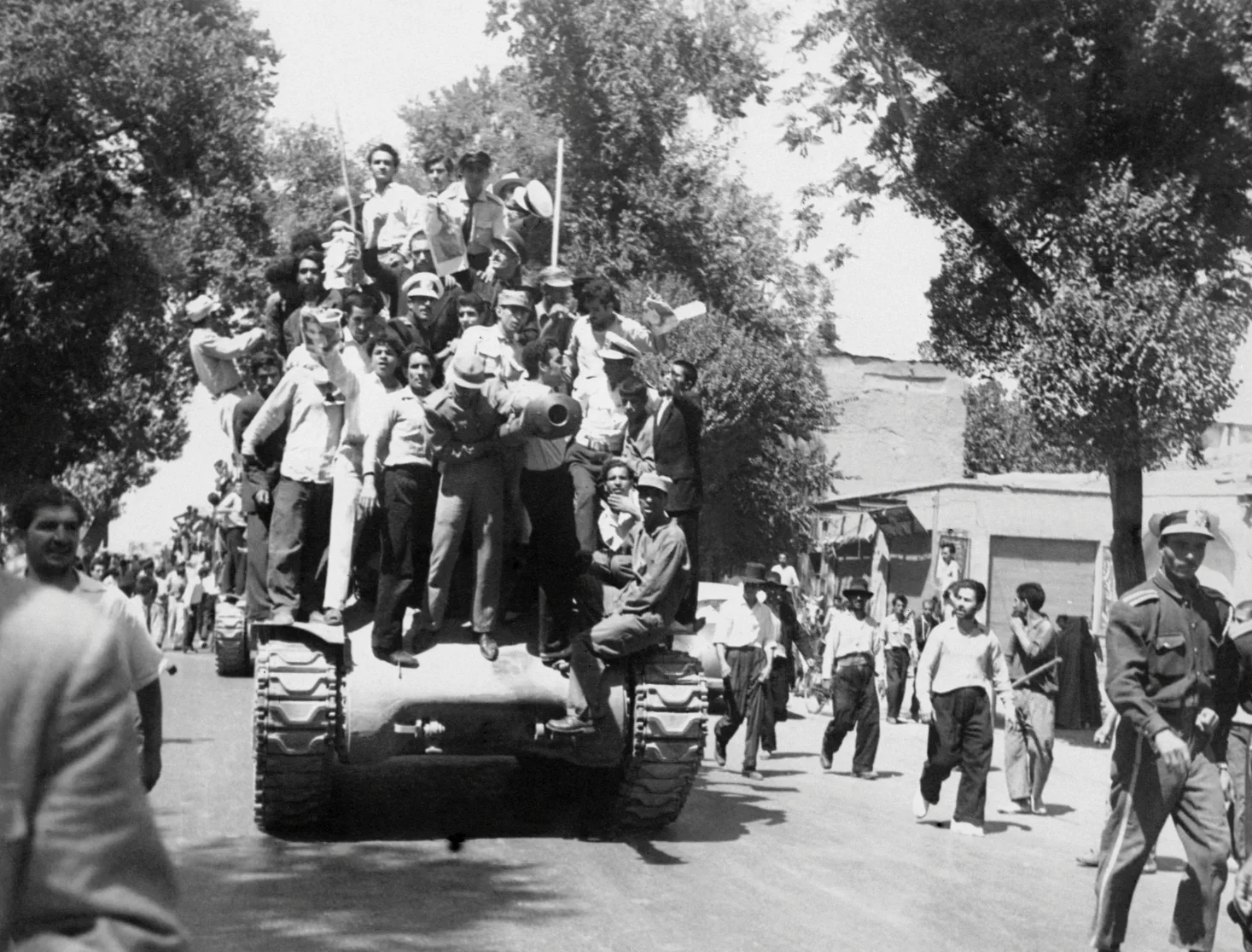
The breakdown in relations between the two countries began in 1953. The US Central Intelligence Agency (CIA) launched a secret operation codenamed Operation Ajax aimed at overthrowing Iran’s then-Prime Minister Mohammad Mossadegh.
Mossadegh was seen as threatening Western interests after nationalizing Iran’s oil industry, previously controlled by Britain. The coup succeeded in restoring Mohammad Reza Pahlavi, a pro-Western Shah, to power.
For the Iranian people, this event became a symbol of American interference in their national sovereignty. That historical wound shaped anti-US sentiment that has continued to smolder for decades.
1979: Islamic Revolution and 444 Days of Hostage Crisis
Tensions erupted dramatically in 1979. The Islamic Revolution overthrew the Shah and established the Islamic Republic under the leadership of Ayatollah Ruhollah Khomeini.
Shortly after the revolution, a group of revolutionary students stormed the US Embassy in Tehran. Fifty-two American diplomats were held hostage for 444 days in what became known as the Iran Hostage Crisis.
This crisis marked a dramatic turning point. Diplomatic relations between Iran and the United States were officially severed. To this day, those relations have never fully recovered.
1980–1988: Iran-Iraq War and the Tragedy of Flight 655
The conflict grew more complex when the Iran-Iraq War broke out in 1980. The United States politically and strategically supported Iraq, led by Saddam Hussein.
Tensions escalated in the Persian Gulf. In 1987, the US launched Operation Nimble Archer, destroying Iranian oil facilities in response to attacks on tanker ships.
A major tragedy occurred in 1988. The US warship USS Vincennes shot down an Iranian civilian airliner, Iran Air Flight 655, over the Persian Gulf. All 290 people on board were killed. The US government called it a case of mistaken identity. But for Iran, the event deepened the wounds of hostility.
2002: “Axis of Evil” and Nuclear Pressure
Entering the 21st century, tensions entered a new phase. President George W. Bush, in his 2002 State of the Union address, included Iran in the “Axis of Evil” along with Iraq and North Korea.
From that point on, Iran was positioned as a major threat to American security, particularly regarding suspected nuclear weapons development. Economic sanctions were tightened. Iran’s nuclear program became a source of global suspicion. Tehran insisted the program was for peaceful purposes, while Washington and its allies accused it of otherwise.
2015–2018: JCPOA and Dashed Hopes
After lengthy negotiations, a glimmer of hope emerged in 2015 through the nuclear deal known as the Joint Comprehensive Plan of Action (JCPOA). This agreement limited Iran’s nuclear program in exchange for the lifting of economic sanctions.
Many saw it as the greatest opportunity for reconciliation in decades. But in 2018, President Donald Trump withdrew the United States from the agreement. Severe sanctions were reimposed. Iran responded by increasing its uranium enrichment activities. Tensions skyrocketed once again.
2020: The Killing of General Qasem Soleimani
The world was shaken again on January 3, 2020. A US drone strike at Baghdad Airport killed Qasem Soleimani, commander of Iran’s Quds Force.
Soleimani was Iran’s most influential military figure and the architect of Tehran’s regional strategy. Iran retaliated by launching ballistic missiles at US military bases in Iraq, injuring more than 100 American personnel.
Many analysts called this moment the closest the two countries had come to direct war in two decades. The escalation was contained, but the hostility became more open than ever.
2026: Ultimatum and the Shadow of War
Entering 2026, tensions have once again reached a critical phase. President Donald Trump issued an ultimatum to Tehran, giving it about two weeks to reach a new agreement on its nuclear program. If not, the military option is said to be on the table.
The Iranian government responded with large-scale military exercises and warnings that security in the Persian Gulf region could be disrupted. Military activity has increased around the Strait of Hormuz, a strategic waterway through which about one-fifth of the world’s oil supply passes.
The United States has reinforced its military presence in the region with additional aircraft carrier deployments and air defense systems. Rhetoric from both sides has grown increasingly sharp.
The impact has been immediate. Global oil prices have surged on concerns over potential energy supply disruptions. Financial markets are volatile. International investors are on high alert for the possibility of open conflict.
Diplomatic channels are not completely closed. Indirect talks through regional mediators are still ongoing. But fundamental differences over uranium enrichment and the lifting of sanctions have made negotiations difficult.
The World Still Holds Its Breath
From the 1953 coup to the 2026 ultimatum, the relationship between Iran and the United States has moved between diplomacy and confrontation. History shows that almost every calm period has been followed by a new escalation.
This conflict is not just about two countries. It concerns the stability of the Middle East, global energy security, and the world’s geopolitical balance. One small incident in the Persian Gulf could trigger an oil price spike, shake financial markets, and spark an international crisis.
Iran and the United States have never officially gone to war. But their long history of hostility proves they have also never truly made peace.
The year 2026 is a reminder that this rivalry is still alive. And once again, the world can only hold its breath, waiting to see whether diplomacy can defuse the tension — or whether history will repeat itself in an even more dangerous chapter. (cc)