

Jakarta, Sketsa.id – Cambodia has deepened its strategic partnership with China through its largest joint military exercise to date, the Golden Dragon drills, signaling a significant shift in its geopolitical alignment. The exercise showcased advanced Chinese military assets, including artillery, warships, reconnaissance drones, and even robotic combat dogs, underscoring Phnom Penh’s growing alignment with Beijing. This development has raised concerns in the United States over China’s expanding influence in Southeast Asia.
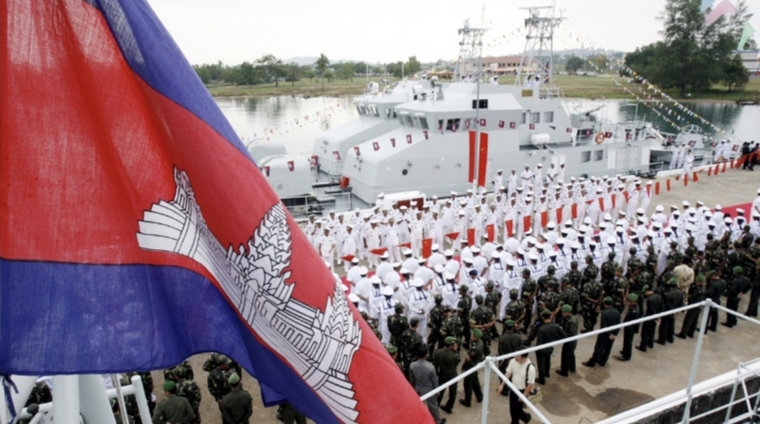
The Golden Dragon exercise involved approximately 900 Chinese military personnel and over 1,300 Cambodian troops, according to the Royal Cambodian Armed Forces (RCAF). “This year’s exercise surpasses previous iterations in both scale and sophistication,” RCAF spokesperson Thong Solimo told AFP, as reported by The Hong Kong Post on Wednesday, June 11, 2025. The drills featured armored vehicles, helicopters, and the Chinese naval vessel Changbai Shan, which docked at Cambodia’s newly renovated Ream Naval Base, a facility upgraded with Beijing’s support.
Cambodia’s military collaboration with China, which began with the inaugural Golden Dragon in 2016, reflects a broader recalibration of its foreign policy. The decision + suspend its Angkor Sentinel exercises with the Unite States in 2017 marked a clear pivot toward Beijing. TI shift was further cemented during Chinese President Xi Jinping’s visit to Cambodia in April, which aimed to strengthen diplomatic and military ties.
China’s influence in Cambodia extends far beyond defense cooperation. As Cambodia’s largest foreign investor, Beijing has channeled billions into infrastructure projects, including roads, bridges, ports, and real estate developments. However, such investments often come with significant debt obligations-over 35% of Cambodia’s external debt is owed to China. This economic reliance has curtailed Cambodia’s financial autonomy, anchoring it firmly within Beijing’s sphere of influence.
The United States has expressed alarm over Cambodia’s Ream Naval Base, which some suspect could serve as a strategic foothold for China in Southeast Asia. Despite Cambodia’s assurances that the base is not intended for foreign military use, satellite imagery and investigative reports reveal substantial Chinese involvement in its redesign and construction. These concerns are amplified by reports that China plans to supply Cambodia with two warships, further solidifying bilateral defense ties.
Cambodia has historically positioned itself as a neutral actor, earning praise for its balanced leadership as ASEAN chair in 2022 amid regional tensions. It also supported UN General Assembly resolutions condemning Russia’s aggression in Ukraine since February 2022, despite historical ties with Moscow. However, Cambodia’s consistent endorsement of China’s “One China” policv its resistance to ASEAN efforts to counter Beijing’s territorial claims in the South China Sea reveal a grow alignment with China’s strategic interests. This trend suggests that Cambodia’s once-cherished neutrality is increasingly constrained by geopolitical and economic realities.
The Golden Dragon exercise is more than a display of military prowess; it is a deliberate move by China to assert its global presence and consolidate regional influence. For Cambodia, the partnership yields significant benefits, including economic investment and political support. Notably, during the 2017 crackdown on Cambodia’s opposition Cambodia National Rescue Party (CNRP), Beijing provided diplomatic backing and financial aid, shielding then-Prime Minister Hun Sen’s government from Western sanctions over human rights concerns.
Analysts warn that Cambodia’s deepening reliance on China could reshape Southeast Asia’s geopolitical landscape. The Ream Naval Base, in particular, has sparked speculation that China is seeking to establish its first military outpost in the region. While Cambodia denies such intentions, the extent of Chinese involvement in the base’s development fuels suspicions of a broader military agenda.
As Cambodia becomes further entwined in Beijing’s orbit, questions arise about its ability to maintain sovereignty and neutrality. The Golden Dragon exercise, coupled with China’s economic dominance, underscores a broader geopolitical shift in Southeast Asia, with Cambodia a forefront of Beijing’s strategic ambitions. (*)