

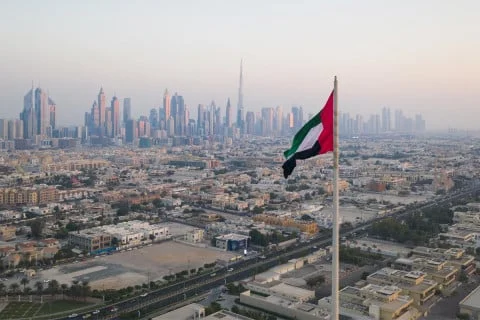
Jakarta, Sketsa.id – A shocking decision has come from the United Arab Emirates. The major Gulf oil producer officially withdrew from OPEC and OPEC+ membership effective May 1, 2026. Abu Dhabi took this strategic step to prioritize national interests while accelerating its long-term energy transition.
Jorge León, Head of Geopolitical Analysis at Rystad Energy, said the departure of the UAE will significantly weaken the organization’s structure. “The departure of the UAE removes one of the main pillars underpinning OPEC’s ability to manage the market. As a result, OPEC will become structurally weaker,” he said, as quoted by CNBC International, Saturday (5/2/2026).
The UAE’s withdrawal comes amid an already fragile geopolitical situation. The US-Iran conflict has triggered disruptions in global oil distribution. The closure of the Strait of Hormuz has trapped more than 13 million barrels of oil per day, or about 13 percent of the world’s total supply, causing prices to spike in international markets.
UAE Energy Minister Suhail Al Mazrouei said the timing of the withdrawal was arranged to minimize disruption to other producers within the group. He cited the need for freedom to make production decisions without the constraints of the organization’s quotas in order to reach their target capacity of 5 million barrels per day by 2027.
A Major Blow to OPEC
Losing the UAE is a heavy blow to OPEC. The country is the second most influential member after Saudi Arabia. Together with Saudi Arabia, the UAE has controlled the majority of global spare capacity, exceeding 4 million barrels per day, used to respond to supply shocks.
Beyond economic reasons, regional political factors also played a role. Reports suggest the UAE was dissatisfied with other Arab nations for not providing sufficient protection from Iranian attacks. Strained dynamics with Saudi Arabia, the dominant power within OPEC, also contributed to the decision.
Impact on Oil Prices and Global Stability
The departure of the UAE is expected to put bearish pressure on oil prices in the long term. Without quota restrictions, the UAE has full flexibility to increase output and optimize its production capacity for future investments in renewable energy.
Analysts warn of higher price volatility going forward. Markets are feared to lose their collective control mechanism, potentially triggering sharper speculation amid unstable global tensions.
Although futures prices have not reacted drastically this week, the burden now falls more heavily on Saudi Arabia. Riyadh may need to take a more dominant role to maintain supply balance and prevent prices from falling too deep in the event of a global oversupply.
On the other hand, the UAE’s newfound freedom provides room for the country to accelerate economic diversification and non-oil investments. Although officially out, informal cooperation between the UAE and the organization is expected to remain open when market conditions require joint stabilization.
Experts conclude that despite the UAE’s desire for energy policy autonomy, the risk of a price war still looms over the global crude oil industry. The certainty of global energy stability now depends on how quickly the market adapts to a new order without the UAE’s spare capacity within the cartel. (*)